What Is the Right Height of a Bike
How to Choose the Perfect Bike Size for a Comfortable Ride**
Choosing the right bike height is one of the most important steps for a safe, comfortable, and enjoyable cycling experience. A bike that’s too small makes pedaling inefficient and causes knee pain. A bike that’s too big is difficult to control and unsafe — especially in a city like Zurich with hills, lakeside routes, and forest paths.
This guide explains how to find your correct bike height, how to measure it, and what to adjust before your ride.
Why Bike Height Matters
When your bike fits correctly, you get:
Better comfort
More efficient pedaling
Less knee, hip, and lower-back strain
More stability and control
Safer riding on hills and curves
A properly sized bike also makes longer rides — such as Zürichsee loops or Sihlwald forest tours — much more enjoyable.
Step 1: Choose the Correct Bike Frame Size
Bike frame size is usually measured in centimeters (road/trekking bikes) or inches (mountain bikes), and depends mainly on your height and inside leg length (inseam).
Here’s a simple frame size guide:
Recommended Frame Sizes by Rider Height
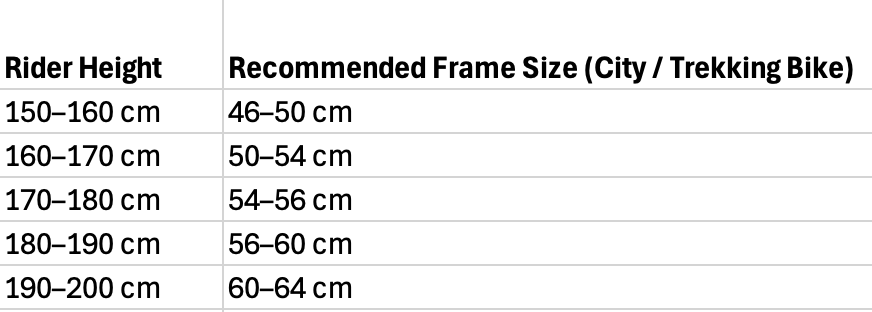
Tip: Most modern rental bikes are adjustable and fit a wide range — but starting with the right frame size is still key.
Step 2: Adjust Your Saddle Height
Even the correct frame won’t feel right unless the saddle is set at the proper height.
How to find the perfect saddle height:
Sit on the bike.
Place your heel on the pedal.
Rotate the pedal to the lowest position (6 o’clock).
Your leg should be fully stretched — without locking your knee.
When you switch back to riding with your forefoot, your leg will then have a slight bend, which is ideal.
Signs your saddle is too low:
Knees hurt
You feel slow or “heavy”
Pedaling feels inefficient
Signs your saddle is too high:
Hips rock side to side
You feel unstable
Lower back discomfort
Step 3: Don’t Forget Handlebar Height
Handlebar height affects comfort and posture.
For city & leisure rides (like most VeloZuri rentals):
Handlebars should be same height or slightly higher than the saddle.
This gives a relaxed, upright position — perfect for Zurich lakeside and forest cycling.
Sportier riders:
Handlebars can be slightly lower for aerodynamic positioning.
Quick Formula: Saddle Height Calculation
A popular method is the Lemond Formula:
Saddle Height = Inseam (cm) × 0.885
Measure from the center of the bottom bracket to the top of the saddle.
This is a more precise starting point used by many bike fitters.
Comfort Is Always the Final Test
Even the perfect measurements may need slight adjustments because every body is different.
During your test ride:
Your back should feel relaxed
Hands and shoulders comfortable
No pressure on the knees
You should be able to place your feet on the ground when stopping
If it feels “just right,” it probably is.
